.webp)


Is Your Foothill Home Ready for the First Cold Autumn Night?
Are you fully prepared for the sudden temperature drops that hit the Sierra Nevada foothills every October? When it comes to reliable home maintenance tips and troubleshooting, the transition from summer cooling to fall heating is often the most critical period for your home's comfort and safety. The shift in weather happens fast in our region. While the Sacramento valley might still be clinging to late summer warmth, Placerville's elevation of over 1,800 feet means that colder autumn nights arrive much sooner. You might be enjoying a mild afternoon, only to find the overnight temperature plunging toward freezing.
This rapid seasonal shift introduces a very concrete problem for local homeowners: turning on the dormant furnace for the very first time. After months of inactivity, flipping that thermostat from "cool" to "heat" can sometimes result in alarming burning smells, strange rattling noises, or a system that simply refuses to stay on. The immediate anxiety is entirely understandable. You are suddenly faced with a critical decision point: are these strange quirks just harmless, temporary seasonal occurrences, or are they warning signs of a dangerous malfunction that could threaten your family's safety?
Navigating this mid-fall heating startup doesn't have to be a guessing game. By understanding exactly how your heating equipment responds to its first real test of the season, you can confidently evaluate your system's safety. Knowing what to look for, what to listen to, and what to smell allows you to separate routine startup behaviors from genuine hazards. The goal is to give you total peace of mind before the deep winter freezes set in across El Dorado County.
Transitioning Seasons: Leaving Summer Cooling Behind
To understand why your heating system acts the way it does in October, we have to look back at the hot, dry summer months we just left behind. Throughout the peak of summer, your entire focus was likely on keeping the indoor air cool and comfortable. If you recently invested in an ac installation folsom upgrade to combat the intense valley and foothill heat, you are already enjoying the benefits of better energy efficiency and reliable cooling. However, as the seasons change, that newly optimized cooling system takes a back seat, and your attention must shift entirely to your heating equipment.
The primary issue with mid-fall heating startups is the long period of dormancy. While your air conditioner was working overtime, your furnace or the heating components of your heat pump were sitting completely idle. In the dry, dusty environment of the Sierra foothills, an idle system is a magnet for debris. Even with a good air filter in place, microscopic particles of dust, pet dander, and occasionally summer wildfire smoke particulates settle into your ductwork, onto your blower motor, and across the sensitive surface of your heat exchanger.
This accumulation process happens slowly over several months. Because the heating components remain cold all summer, this settled dust simply rests in place. It is only when October arrives and you demand heat for the first time that this dormant period reveals its consequences. The sudden introduction of intense heat to a dusty environment is the primary cause of startup anxiety. Understanding that your system has basically been "asleep" and gathering dust for half the year is the first step in troubleshooting those initial, unsettling moments when the furnace roars to life.
What to expect during the transition:
• Initial hesitation: The system may take a moment longer to ignite or engage as the thermostat communicates with the heating relays for the first time in months.
• Airflow adjustments: The first rush of air through the vents will often dislodge loose, settled dust from the ductwork.
• Thermostat calibration: You may notice the system runs slightly longer on its first cycle as it works to bring the ambient room temperature up to your desired setting.
The Infamous Burning Dust Smell: Normal Burn-Off vs. Hazard
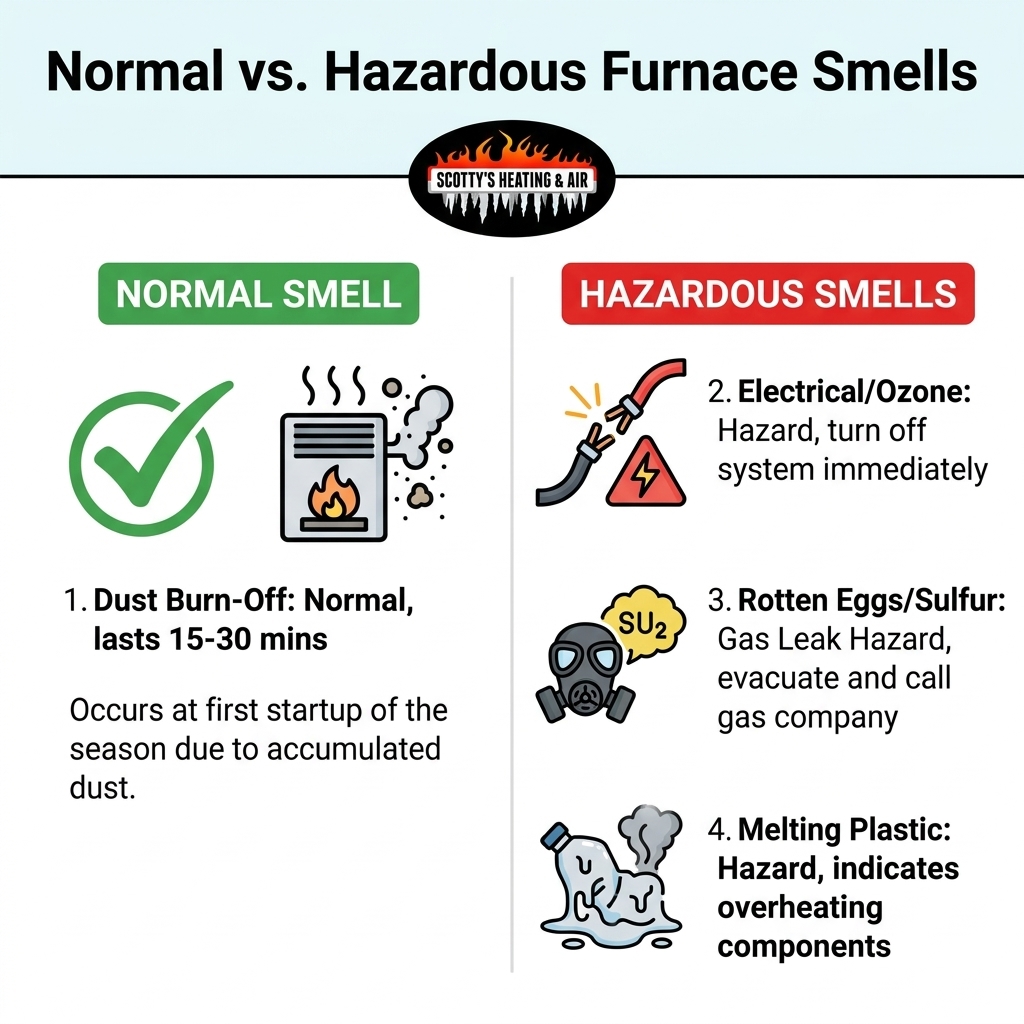
Perhaps the most common source of panic during an October heating startup is the sudden, unmistakable smell of something burning. When you turn on your furnace, the burners ignite and rapidly heat up the metal heat exchanger. As the blower fan pushes air over this hot metal, it also incinerates all the fine particulates that settled there over the summer. The science of the burning dust smell is straightforward: it is literally the scent of microscopic debris being safely burned away by the normal operation of your furnace.
The dry, dusty conditions of the Sierra foothills during late summer heavily exacerbate the amount of dust that settles in dormant ductwork. Therefore, a noticeable burning smell is entirely normal. However, establishing the correct timeframe is crucial. A standard dust burn-off should begin to dissipate within 15 to 30 minutes of continuous operation. If the smell clears up quickly, your system is simply clearing its throat for the winter. If the smell persists, or if it takes on a distinct chemical or metallic odor, you must take immediate action.
To help you make an informed decision on whether to let the system run or shut it down immediately, it is vital to contrast harmless dust with actual hazardous odors. Electrical burning, sulfur, and melting plastic are never normal.
• Dry, Musty Burning — Common Cause: Summer dust clearing off the heat exchanger. — Safety Level: Normal (Harmless) — Required Action: Monitor for 15-30 minutes; open a window if needed.
• Ozone or Electrical — Common Cause: Overheating blower motor or failing wiring. — Safety Level: Hazardous — Required Action: Turn off the system immediately at the thermostat.
• Sulfur or Rotten Eggs — Common Cause: Natural gas leak near the combustion chamber. — Safety Level: Severe Hazard — Required Action: Evacuate the home and call your gas provider immediately.
• Melting Plastic — Common Cause: Foreign object in vents or melting internal components. — Safety Level: Hazardous — Required Action: Shut down the system and schedule a professional inspection.
Troubleshooting Short Cycling and Startup Noises
Beyond strange smells, the mechanical behavior of your heating system during its first fall startup can also raise red flags. One of the most frequent issues homeowners encounter is a phenomenon known as short cycling. Short cycling occurs when the furnace or heat pump turns on, runs for a very brief period, and then abruptly shuts off before the home has reached the desired temperature on the thermostat. This rapid on-and-off sequence not only leaves your house cold, but it also places immense wear and tear on the system's internal components.
Problem: The System Won't Stay Running (Short Cycling)
The Cause: In the vast majority of cases, short cycling during the first cold snap is caused by a severely clogged air filter. Throughout the summer, your filter works hard to trap wildfire smoke, pollen, and household dust. If that filter wasn't changed at the end of the cooling season, it creates a massive restriction in airflow. When a furnace cannot pull enough air through the system, the internal heat exchanger rapidly overheats. A built-in safety mechanism called the limit switch detects this dangerous temperature spike and immediately shuts the burners down to prevent a fire.
The Solution: The easiest and most effective troubleshooting step is to check and replace your air filter. Ensuring clear, unobstructed airflow is often enough to resolve a short cycling issue entirely. If a fresh filter does not solve the problem, the limit switch itself or the flame sensor may be coated in summer grime, requiring a professional cleaning.
Problem: Alarming Startup Noises
The Cause: It is important to distinguish between normal operational sounds and signs of mechanical failure. Normal startup noises include a series of initial clicks (the thermostat communicating with the relays and the igniter engaging), followed by a low whoosh of gas igniting, and finally the steady rushing sound of air moving through the vents. Abnormal noises are much more jarring. A loud banging or booming sound when the furnace turns on often indicates delayed ignition—a small buildup of gas that ignites all at once because the burners are dirty. A high-pitched squealing usually points to a failing blower motor belt or dry bearings. Grinding sounds suggest metal-on-metal friction within the motor assembly.
The Solution: While you can safely observe and listen to these sounds, fixing them is not a DIY project. A failing component requires immediate professional attention. One local homeowner experienced this firsthand last fall when their heat pump went out unexpectedly in the evening, making terrible noises. A technician responded quickly, diagnosed the failing component, and restored the heat before the house got too cold. Ignoring abnormal noises usually leads to a complete breakdown on the coldest night of the year.
Evaluating Your Aging Heating System: Repair or Replace?
Sometimes, an October heating startup reveals issues that go beyond a simple dirty filter or a harmless dust burn-off. If your system struggles to turn on, makes violent noises, or requires constant adjustments just to maintain a baseline level of comfort, you may be facing a larger structural failure. This brings homeowners to a critical crossroads: do you continue pouring money into repairs, or is it time to consider a full replacement?
The lifespan of a traditional furnace or heat pump is typically around 15 to 20 years, provided it has received regular maintenance. If your system is approaching or has surpassed the two-decade mark, the efficiency losses are likely substantial. Outdated systems have to work twice as hard to produce the same amount of heat, leading to inflated energy bills and recurring, frustrating repair needs. The heat exchangers in older furnaces are also more susceptible to cracking, which can introduce dangerous carbon monoxide into your living space.
If your mid-fall startup reveals that your system is on its last legs, upgrading to a high-efficiency heat pump or a dual-zoned system offers incredible benefits. For large, multi-level homes in the foothills, dual-zoning ensures that the basement stays warm without overheating the upstairs bedrooms. In another instance, a customer faced the winter season without any functional central heating and air system at all. By installing a complete, modern central system, they were able to transform a freezing house into a comfortable, efficiently climate-controlled environment.
When weighing your options, it is highly beneficial to read more about deciding whether to repair or replace an aging AC or heating system. Keep in mind that modernizing your home's HVAC infrastructure often comes with financial incentives. Various federal tax credits, state energy rebates, and local utility incentive programs may apply to qualifying high-efficiency upgrades. While specific program details change frequently, checking with a tax professional or your local utility provider can uncover significant offsets to the initial cost of a new, reliable system.
The Importance of Professional Pre-Winter Safety Inspections
While checking your air filter and monitoring startup smells are excellent homeowner habits, there is a hard boundary between basic observation and required professional maintenance. Heating equipment is a complex integration of high-voltage electricity, combustible gases, and rapid temperature changes. According to data from the National Fire Protection Association (NFPA), heating equipment is a leading cause of home fire deaths, heavily driven by a lack of routine maintenance and the failure to clean internal heating units.
Because of these inherent risks, any work involving gas lines, combustion chambers, heat exchangers, or complex electrical relays must be handled exclusively by a licensed professional. Attempting to clean a flame sensor, adjust gas pressure, or bypass a safety switch on your own is incredibly dangerous and can easily void your manufacturer's warranty.
A professional pre-winter inspection goes far beyond simply turning the system on. When a certified technician evaluates your furnace, they conduct a rigorous safety protocol. This includes testing the high-limit safety switches to ensure they will actually shut the system down in an emergency. They calibrate the thermostat for precise communication, inspect the electrical terminals for signs of arcing, and most importantly, perform a thorough inspection of the heat exchanger to check for microscopic cracks that could leak carbon monoxide.
Relying on Scotty's Heating & Air's deep local roots and trusted reputation in El Dorado County means you are partnering with professionals who understand the specific demands of foothill winters. A thorough inspection provides the ultimate peace of mind. Instead of crossing your fingers every time the thermostat calls for heat, you can rest easy knowing that your system has been professionally verified to operate safely, efficiently, and reliably all winter long.
Frequently Asked Questions
Why does my heater smell like burning dust when I turn it on?
The smell is caused by the incineration of microscopic debris that has settled on your heat exchanger. Throughout the long summer months, dust, pet dander, and airborne particles accumulate inside the dormant system. When the furnace ignites for the first time in autumn, the sudden intense heat safely burns off this layer of dust, resulting in a temporary, musty burning odor.
How long should the burning smell last from my furnace?
A normal dust burn-off should dissipate within 15 to 30 minutes of continuous operation. Once the initial layer of summer debris is cleared from the heat exchanger, the air circulating through your vents should smell clean and neutral. If the burning smell lasts longer than an hour, or if it smells like electrical wires or plastic, shut the system down immediately.
Why is my furnace short cycling during the first cold snap?
Short cycling is most commonly caused by a severely restricted airflow, usually due to a dirty or clogged air filter. When the system cannot pull enough air through the filter, the internal temperature spikes rapidly, causing the safety limit switch to shut the burners off prematurely. Replacing your air filter is the first and most important step in troubleshooting a short-cycling furnace.
When should I call a professional for furnace repair in Placerville?
You should call a professional anytime your system exhibits signs of mechanical or combustion failure. This includes persistent burning smells, loud banging or squealing noises upon startup, continuous short cycling that isn't fixed by a new filter, or any smell of sulfur and rotten eggs. Never attempt to repair gas lines or electrical components yourself.
What basic heating maintenance can I safely do myself?
Homeowners can safely perform several vital maintenance tasks without special tools. You should regularly inspect and replace your HVAC air filters, ensure that all room vents and return registers are unblocked by furniture or rugs, and keep the area directly around your indoor furnace completely clear of clutter. You can also safely replace the batteries in your wall thermostat.
Are heat pumps a reliable option for Sierra foothill winters?
Yes, modern high-efficiency heat pumps are highly reliable and effective for foothill climates. Advances in compressor technology allow newer models to extract ambient heat from the air even when temperatures drop significantly. For larger homes or properties at higher elevations, a dual-fuel system (combining a heat pump with a gas furnace backup) offers exceptional efficiency and comfort.
Customer Testimonials
Hear what our Placerville customers are saying about their experience with Scotty’s Heating & Air.

Great company, great guys, and great equipment! We couldn't be happier with our new HVAC system. It works amazingly well ice cold AC and it is super efficient too. I use these guys for my business and my own house and I would even send them to my grandma's house too. Scott and Tim are rockstars thank you again for helping me out!
We had Scotty’s come out to do a tune-up of our gas heater. The technician adjusted it to burn less gas and protect the longevity of the burner, which we appreciate. The price was reasonable, and we joined their priority services membership.
I called Scotty’s on a Monday to say my system was not working and they were there first thing the next morning to fix my system. Tim was the tech and he did an excellent job. He explained everything he did and my system was up and running again within an hour all for a very reasonable price.
Hottest day so far if the year and my AC stopped working. I called and Scotty called me back within 15 minutes and sent Tim to arrive within an hour. Tim was great, friendly, professional and fixed it quick. I’m so appreciative of their great and fast service!
I absolutely had the best experience! Called at 8am, someone was here by 9:30am and quickly found the problem, he had the part I needed on his service truck and it was replaced and my AC was back up and running in less than 15 minutes! I will be using them again for all my AC/Heating needs!


